Australian farmers know that baling efficiency is about more than simply producing a tight, well-shaped bale. Every metre of wrapping material matters, particularly during busy harvest periods when machinery needs to keep moving and valuable feed must be protected from the elements. UV-resistant net replacement film offers an alternative that reduces net tail waste while providing reliable bale protection in demanding Australian conditions.
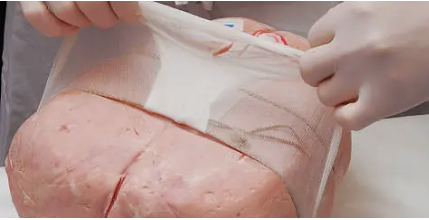
Unlike traditional net wrap, net replacement film is applied directly over the bale and is designed to cling tightly. This film-on-film approach can help create a more secure outer layer while reducing loose tails and excess material left behind during baling.
Why Net Tail Waste Matters
Net tails can be more than an inconvenience. Loose pieces of netting can be difficult to handle around feeding equipment, complicate bale opening, and add to plastic and agricultural waste that needs responsible disposal.
A UV-resistant net replacement film addresses these issues by forming a continuous film layer around the bale. Its high-tack properties allow each layer to adhere to the next, helping maintain consistent coverage without relying on conventional netting.
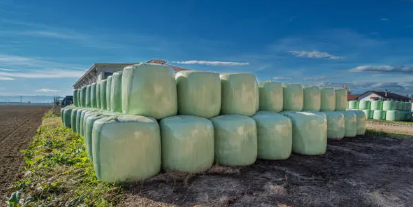
For Australian producers, this can be particularly useful when baling hay, straw and silage in conditions ranging from intense summer heat to variable weather across regional farming areas.
How Film-on-Film Baling Technology Works
High Tack for Consistent Coverage
The key principle behind film-on-film baling technology is adhesion. Instead of wrapping the bale with netting, the film bonds to itself as it is applied, helping create a cohesive outer layer.
High tack is important because the material needs to remain securely positioned during handling, transport and storage. A well-applied film layer can also help maintain the bale’s shape and minimise areas where material could loosen.
UV Resistance for Australian Conditions
Australia’s strong sunlight can challenge agricultural plastics stored outdoors. UV-resistant net replacement film is manufactured with protection against ultraviolet exposure, helping the wrapping retain its functional properties during storage.
Performance depends on the product, application, and storage environment, so farmers should always follow the manufacturer’s recommended storage and usage conditions.
Benefits for Australian Baling Operations
Switching to UV-resistant net replacement film can provide several practical advantages when the product is correctly matched to the baler and crop:
● Reduced net tail waste: Film is designed to wrap continuously around the bale rather than leaving traditional net tails.
● Strong layer adhesion: High-tack surfaces help the film grip itself during wrapping.
● Reliable bale coverage: Consistent application can support a uniform outer layer.
● Improved handling: Film-only wrapping can simplify bale opening compared with dealing with loose netting.
● Suitability for tough conditions: UV resistance helps the material perform during outdoor storage and exposure to Australian sunlight.
Choosing the Right Film for Your Baler
Not every wrapping solution performs identically. Before changing materials, check that the UV-resistant net replacement film is compatible with your baler, wrapping system, bale dimensions and intended crop.
Pay particular attention to film thickness, stretch characteristics, tack, UV protection and recommended application settings. Correct tension and overlap are also important because even a high-quality product cannot compensate for unsuitable machine settings.
For contractors and large-scale operators, testing the film across different crops and conditions can help establish the right settings before committing to a full-season change.
Reduce Waste Without Compromising Bale Protection
UV-resistant net replacement film provides Australian farmers with a practical way to rethink traditional bale wrapping. By combining high-tack, film-on-film baling technology with UV resistance, it can help reduce net tail waste while delivering consistent bale coverage.
If your operation is looking for a cleaner, more efficient wrapping solution, speak with an agricultural packaging supplier about UV-resistant net replacement film suited to your baler and local conditions.
—
Frequently Asked Questions
1. What is UV-resistant net replacement film?
It is agricultural bale-wrapping film designed to replace conventional net wrap while resisting ultraviolet exposure during storage.
2. How does film-on-film baling technology work?
The film wraps around the bale and adheres to itself, forming a continuous outer layer rather than relying on netting.
3. Can net replacement film reduce net tail waste?
Yes. Because the film forms a continuous layer, it can eliminate the loose net tails associated with conventional net wrap.
4. Is net replacement film suitable for Australian conditions?
UV-resistant products are designed to better withstand ultraviolet exposure, but suitability depends on the specific product, baler, crop and storage conditions.
5. What should farmers check before switching?
Confirm compatibility with the baler, recommended settings, film specifications, tack, stretch characteristics, and UV protection before switching.